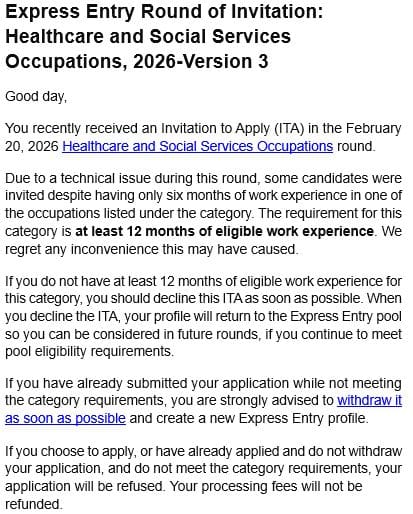
Imagine how many ITAs wasted which would have otherwise gone to 1000s of deserving aspirants sitting on lower scores. 🥺😠
Reminder: You need 12months of eligible valid work experience to qualify in a category draw.

Imagine how many ITAs wasted which would have otherwise gone to 1000s of deserving aspirants sitting on lower scores. 🥺😠
Reminder: You need 12months of eligible valid work experience to qualify in a category draw.

IRCC is now outright refusing applications on the basis that work experience documents carry duties that are “direct paraphrase” or “closely adapted” from the NOC website. The concern is that the duties are not aligned with employer-specific detail. I have seen a total of 5 such refusals over the last 10 days. Please note that you should NOT be drafting your own duties – just by paraphrasing/adapting duties from NOC website – rather your employer should be providing unique/specific duties as applicable to your job role. Applicant beware! It seems IRCC officers are being incentivised to refuse applications on the smallest and sometimes irrelevant grounds.
I am not sure how many of you have noticed, but IRCC, candidly made a very subtle but yet very important change to the Ministerial Instructions that govern the category draws. While, the work experience requirement has been increased to 12 months from the earlier 6months, they have also made a further change, whereby the applicant’s eligibility for the category is established only if 12 months work experience has been completed before receiving the ITA. Earlier with the 6 months work experience eligibility could have been fulfilled until the day of submission of the application. 𝚂̲𝚘̲ ̲𝚒̲𝚗̲ ̲𝚌̲𝚊̲𝚜̲𝚎̲ ̲𝚢̲𝚘̲𝚞̲ ̲𝚑̲𝚊̲𝚟̲𝚎̲ ̲𝚛̲𝚎̲𝚌̲𝚎̲𝚒̲𝚎̲𝚟̲𝚎̲𝚍̲ ̲𝚢̲𝚘̲𝚞̲𝚛̲ ̲𝙸̲𝚃̲𝙰̲ ̲𝚠̲𝚒̲𝚝̲𝚑̲ ̲𝚊̲ ̲𝚜̲𝚑̲𝚘̲𝚛̲𝚝̲𝚎̲𝚛̲ ̲𝚍̲𝚞̲𝚛̲𝚊̲𝚝̲𝚒̲𝚘̲𝚗̲ ̲𝚘̲𝚏̲ ̲𝚠̲𝚘̲𝚛̲𝚔̲ ̲𝚎̲𝚡̲𝚙̲𝚎̲𝚛̲𝚒̲𝚎̲𝚗̲𝚌̲𝚎̲,̲ ̲𝚙̲𝚕̲𝚎̲𝚊̲𝚜̲𝚎̲ ̲𝚙̲𝚊̲𝚢̲ ̲𝚑̲𝚎̲𝚎̲𝚍̲ ̲𝚝̲𝚘̲ ̲𝚝̲𝚑̲𝚎̲ ̲𝚌̲𝚛̲𝚒̲𝚝̲𝚎̲𝚛̲𝚒̲𝚊̲.̲
If you’re waiting for an ITA, it’s important to read the recent CRS drop with some perspective. Yes, scores have come down. That’s a good sign. But if you look at Express Entry over the years, one thing is consistent: short-term drops don’t automatically turn into long-term trends. 𝐖𝐞’𝐯𝐞 𝐬𝐞𝐞𝐧 𝐭𝐡𝐢𝐬 𝐩𝐚𝐭𝐭𝐞𝐫𝐧 𝐛𝐞𝐟𝐨𝐫𝐞: 🔴 In 2020–2021, CRS fell quickly because of large and targeted draws. Once things stabilised, scores climbed back up. 🔴 In 2022, when draws restarted after long pauses, cut-offs dipped briefly and then rose steadily as backlogs built again. 🔴 In 2023–2024, category-based draws created selective relief for some candidates, while overall competition continued to intensify. December/January pushed CRS into uncomfortable territory, not because demand disappeared, but because IRCC adjusted how and who they were inviting. 𝐇𝐨𝐰 𝐭𝐨 𝐑𝐞𝐚𝐝 𝐭𝐡𝐞 𝐂𝐑𝐒 “𝐆𝐫𝐚𝐩𝐡” 𝐏𝐫𝐨𝐩𝐞𝐫𝐥𝐲 CRS doesn’t move in a straight line. It never has. If you map it out over time, what you actually see is: 👉 sudden drops when IRCC goes mum or draw sizes decrease or categories are targeted, 👉 quiet stretches when draws slow or pause, 👉 and quick jumps when IRCC changes direction. It’s a stop-start system. Anyone expecting a smooth downward slide is ignoring how this program actually works. 𝐖𝐡𝐚𝐭 𝐓𝐡𝐢𝐬 𝐌𝐞𝐚𝐧𝐬 𝐟𝐨𝐫 𝐘𝐨𝐮𝐫 𝐒𝐭𝐫𝐚𝐭𝐞𝐠𝐲 ✅ If you were working toward French points, keep going. That advantage holds up best when the system gets volatile. ✅ If you planned to retake IELTS or CELPIP, don’t put it off. Language scores remain the most reliable way to improve CRS. ✅ If your plan involved more work experience or provincial pathways, stay consistent. Those buffers matter most when scores climb again. ✅ If you were wooing an employer to get that job offer for the PNP, don’t ease up on the chocolates and flowers now or being that good employee. 𝐓𝐡𝐞 𝐁𝐨𝐭𝐭𝐨𝐦 𝐋𝐢𝐧𝐞 There are real reasons to think CRS could ease further.There are equally strong reasons to believe it could reverse just as quickly. 𝐁𝐨𝐭𝐡 𝐨𝐮𝐭𝐜𝐨𝐦𝐞𝐬 𝐟𝐢𝐭 𝐈𝐑𝐂𝐂’𝐬 𝐩𝐚𝐬𝐭 𝐛𝐞𝐡𝐚𝐯𝐢𝐨𝐮𝐫. The smart move isn’t guessing the next draw, it’s sticking to the plan you already built and continuing to improve what you can control. The people who slow down during temporary dips are usually the ones scrambling when the bar moves again. 👉✅